


















 Deutsch
  Englisch
 How to make beetroot juice: 5 recipes + runner's practical test
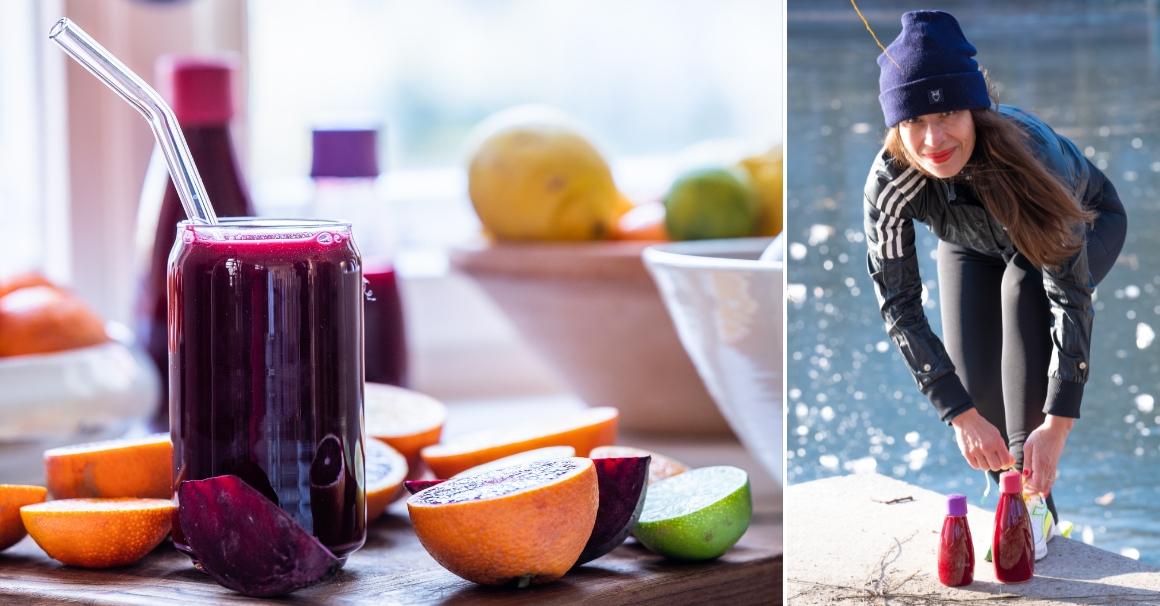
Beetroot juice is said to be a true superfood – rich in vitamins, minerals, and secondary plant compounds. Yet, many people (and not just children) turn up their noses at the mere thought of this red tuber. What we discovered: with beetroot, you can prepare incredibly delicious juices that make any culinary heart beat faster. Its earthy, sweet flavour harmonises wonderfully with citrus aromas, ginger, and herbs like mint or lemon verbena. That’s almost all it takes to convince even the most stubborn beetroot sceptics to join the purple experiment. And honestly: is there any colour more seductive to drink than beetroot juice?
Of course, homemade beetroot juice doesn’t just taste better than store-bought versions; it’s also likely to contain significantly more nutrients. We’ll introduce you to the red tuber and share our best beetroot juice recipes. You’ll learn everything you need to know about preparing fresh beetroot juice, right down to choosing the right juicer. Plus, we take a look at the hype: why many endurance athletes swear by beetroot juice to boost their performance – because Carla has put it to the practical test!
How to make beetroot juice: Overview of topics
- Why is beetroot juice so healthy?
- Beetroot juice for endurance athletes: Carla's practical test
- How can I make beetroot juice at home?
- Which juicer is best for beetroot?
- Homemade beetroot juice: 5 favourite recipes
- Frequently asked questions about beetroot juice
Why is beetroot juice so healthy?
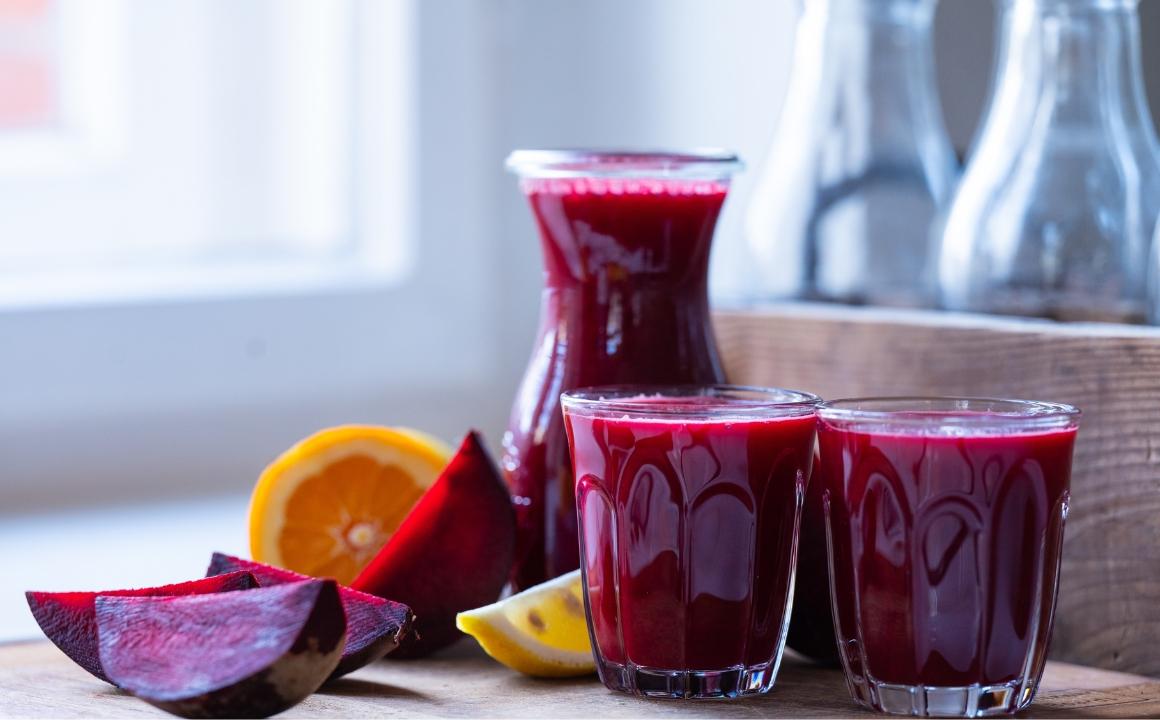
Beetroot (also known as garden beet) is one of the most nutrient-dense vegetables available. Among other things, it provides us with minerals and trace elements such as calcium, potassium, magnesium, sodium, and iron, as well as B vitamins, vitamin C, and important secondary plant compounds. No wonder this red tuber is a key ingredient in traditional dishes worldwide, such as North German "Labskaus" or Eastern European "Borscht."
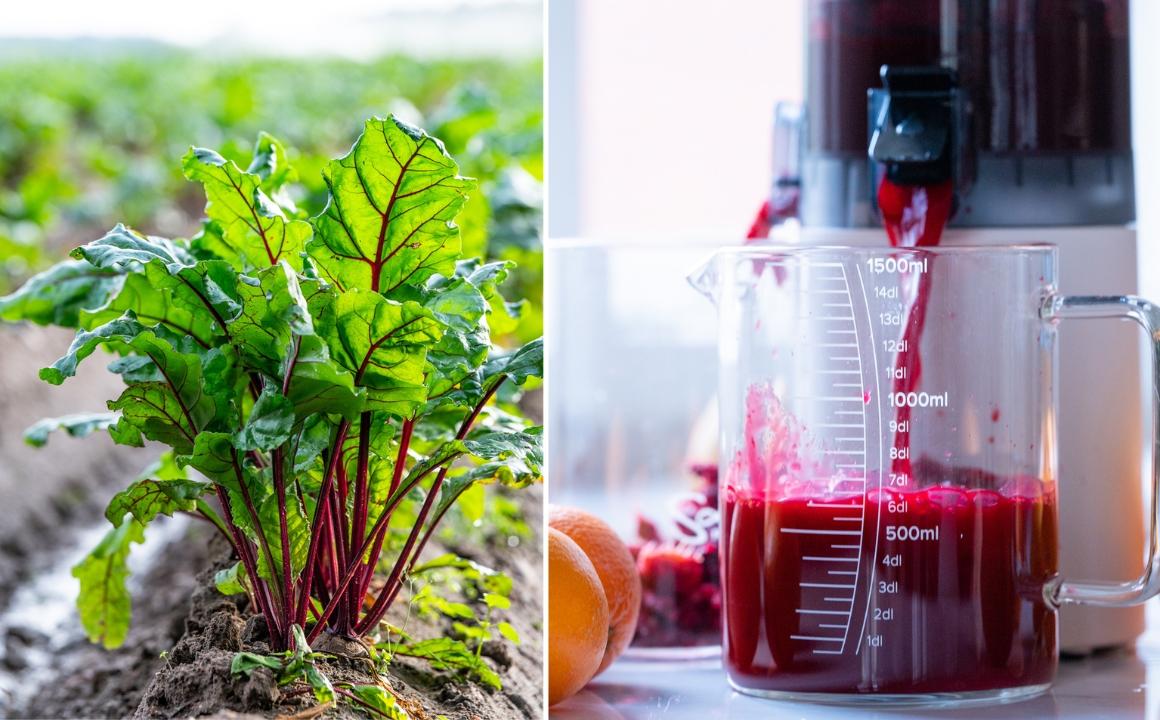
Processed raw – as in a freshly pressed juice – the maximum "root power" ends up in your glass, because we juice the beetroot using the cold-press method with a Slow Juicer. This ensures that heat-sensitive ingredients, such as vitamin C, are preserved.
Key nutrients in beetroot juice:
- Nitrates: Converted into nitric oxide in the body, they can dilate blood vessels. This is particularly interesting for endurance athletes, which we discuss in the next chapter.
- Folic Acid: Beetroot is rich in folic acid, which is vital for the formation of red blood cells.
- Iron: Can support oxygen transport in the blood. Not only beneficial for athletes.
- Antioxidants: Betalains are the secondary plant compounds that give beetroot its intense colour and fight free radicals due to their antioxidant properties.
Beetroot is harvested in late autumn and, thanks to its excellent storage life, is available as a local vegetable all winter long – exactly when we need its root power the most.
Beetroot juice for endurance athletes: Carla's practical test
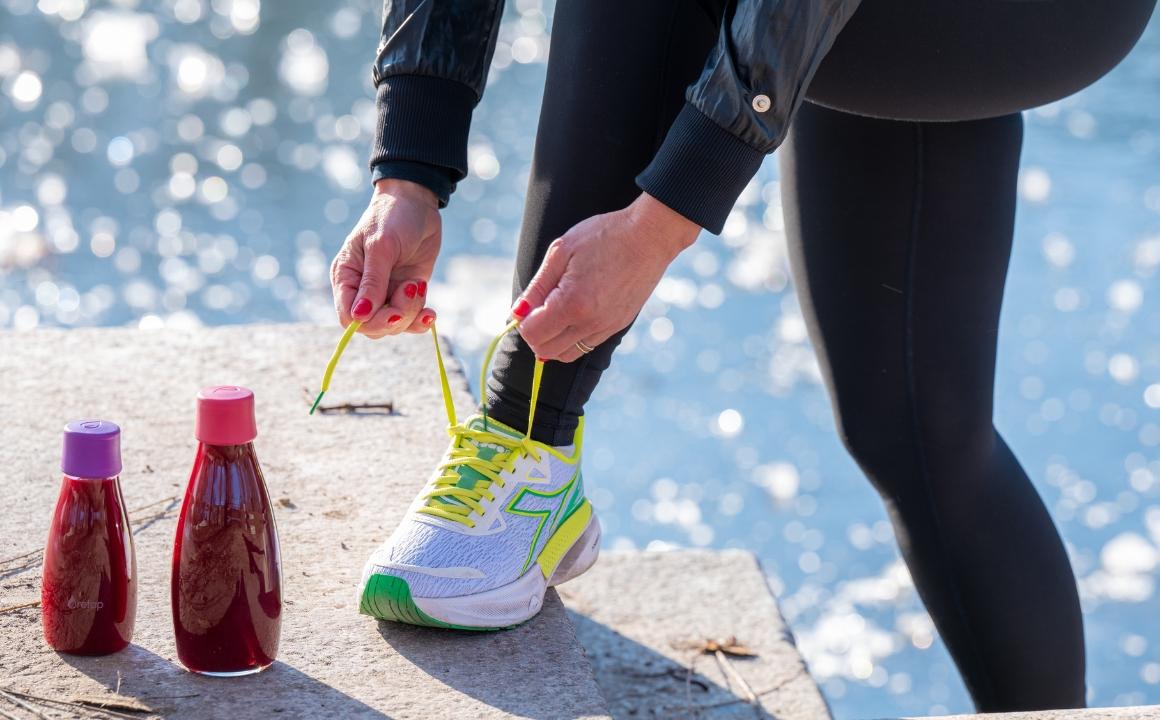
Before I became a mother, I ran two marathons a year for many years – Hamburg in the spring and Berlin in the autumn. In between, there were several 10K races and at least one half-marathon as a performance test. There was no off-season for me; I simply always ran. Until my daughter was born – the running remained, but the mileage was reduced and I lost interest in competitions.
A few years ago, I got the bug again, only to find that I had lost quite a bit of speed. My daughter, not yet an adult, outclassed me after a few months of training for a 10K race. This delights my runner's heart deeply but simultaneously spurs me on to at least try and keep up. Structured training with long runs, tempo, and interval sessions is back on my agenda. And because I have "a few more years on the clock," I now consciously fine-tune every detail between strain and recovery to increase my performance while remaining injury-free.
And this is where my beloved beetroot juice comes in. Back in the marathon game, I suddenly encountered a crowd of runners on Instagram posting stories for a week before their marathon, choking down beetroot juice from cartons with the idea of boosting performance during the race. My interest was piqued; the willingness to use delicious, freshly pressed beetroot juice as a natural "doping" agent was fully there. But first, I had to understand why and how it was supposed to work. What I discovered theoretically is explained below; what my subjective feeling is after a 2-year test can be found in the conclusion:
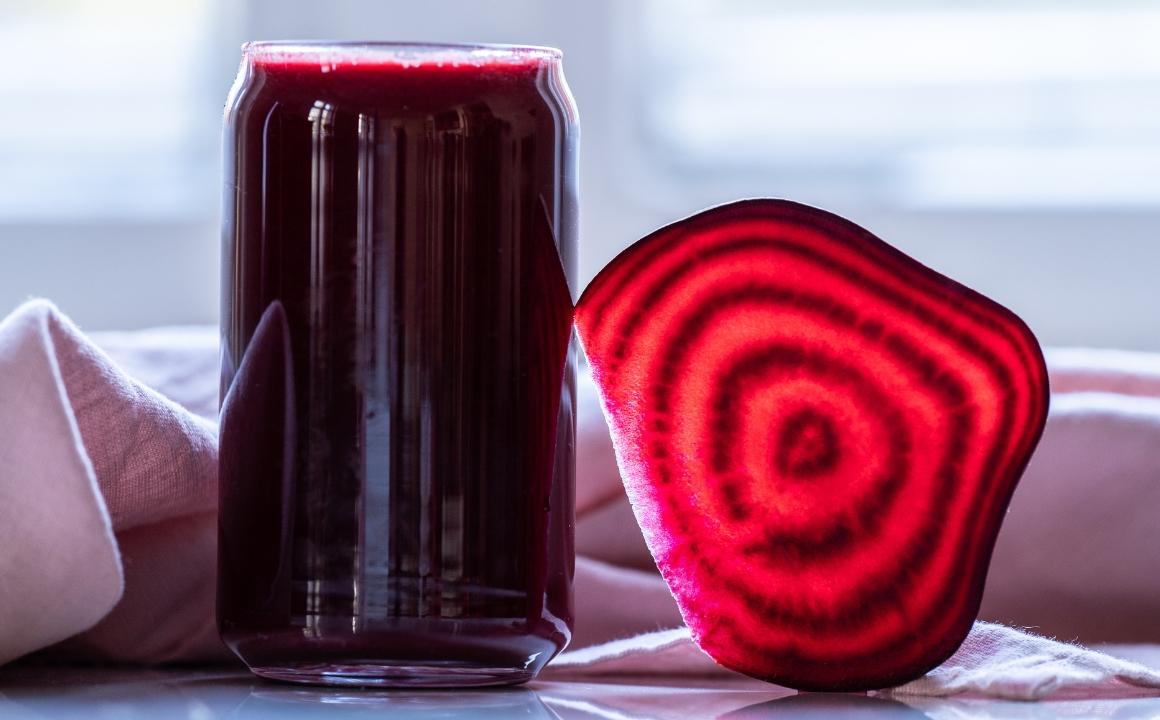
How can beetroot juice boost your performance?
Beetroot juice has established itself in the sports world as a natural performance booster – completely legal and without side effects. Numerous studies suggest that those who drink beetroot juice regularly may measurably improve their endurance performance. The secret lies in the natural nitrates found in beetroot. In the body, these are converted into nitric oxide (NO), which can have several positive effects:
Possible benefits for athletes:
1. Improved oxygen utilisation
- Mitochondria are said to work more efficiently
- Less oxygen may be required for the same performance
- Fatigue can be delayed
2. Dilated blood vessels
- Blood flow to the muscles can be improved
- Nutrient transport can be accelerated
- Oxygen supply can be optimised
3. Increased VO2max
VO2max (maximum oxygen uptake) describes the maximum amount of oxygen your body can take in, transport, and utilise in the muscles per minute during intense physical exertion. The higher your VO2max, the more oxygen is available to your muscles for energy production – and the longer and more intensely you can sustain endurance efforts.
- Maximum oxygen uptake can be increased
- Studies suggest a possible performance boost in endurance sports
- Endurance capacity can be extended
4. Faster recovery
- Anti-inflammatory properties may take effect
- Muscle soreness can be reduced
- Recovery after intense sessions can be accelerated
As a beetroot fan, it was clear that I would test the juice for performance enhancement. If even 2 of the 4 points mentioned were true – perfect. Furthermore, it is said that recreational athletes feel performance-enhancing effects, such as a lower heart rate at the same load or a longer period until exhaustion, more clearly than elite athletes. The reason: in elite athletes, the systems for oxygen transport and usage are already highly optimised, so the effect of beetroot juice on performance is much smaller. However, it can still be interesting – especially when it comes to seconds or hundredths.
And of course, beetroot juice is not only interesting for runners, but for all endurance sports – likewise for cycling, triathlon, duathlon, or swimming.
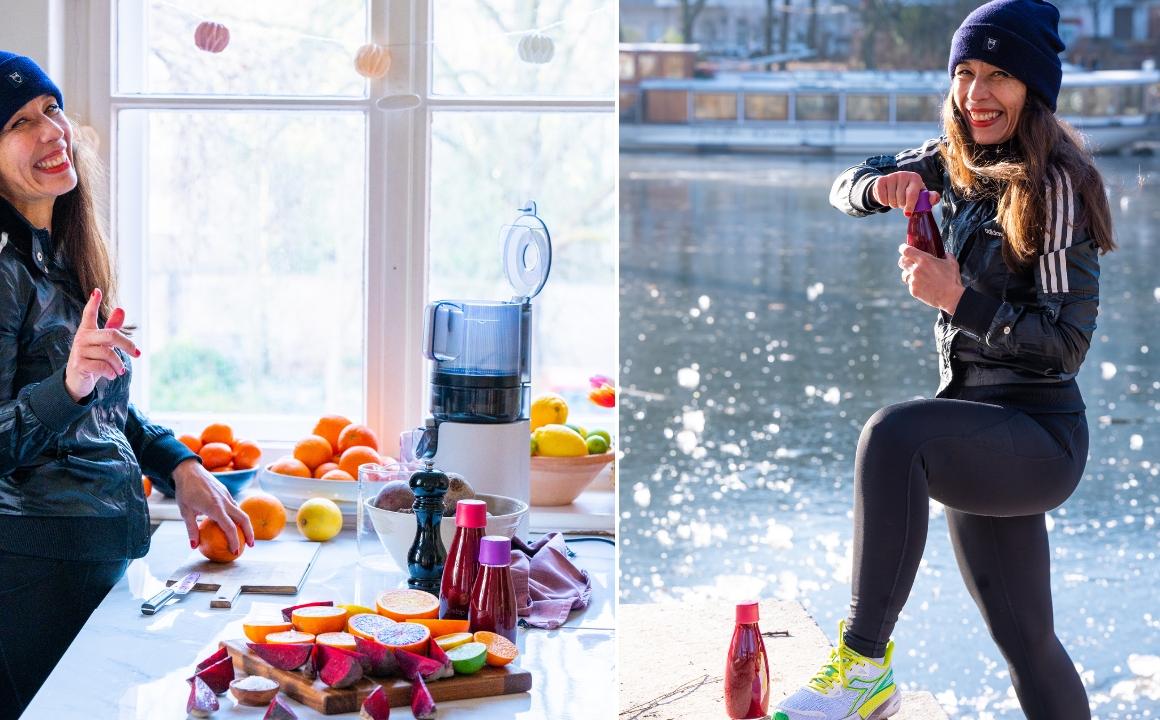
Timing is key: When should you drink beetroot juice?
Before training or competition
Recommended time: 2-3 hours before exertion
Nitrate levels in the blood can peak after about 2-3 hours. This is when the performance-supporting effect might be greatest. If I have a tempo run scheduled for midday, I drink my juice somewhere between 9 and 10 am.
Dosage: 300-500ml of beetroot juice is often cited as a benchmark. For my pre-workout juice, I prefer the Runner's Booster recipe. In addition to beetroot and citrus fruits, this creation contains a good pinch of salt for electrolyte balance.
Tip for competitions:
You could start a daily "cure" 3-6 days before a race and drink approx. 400 ml of beetroot juice in the morning. This may help top up your body's nitrate stores. If well-tolerated (please test in training first!), I would drink about 300 ml of juice approximately 2.5 hours before the start of the race.
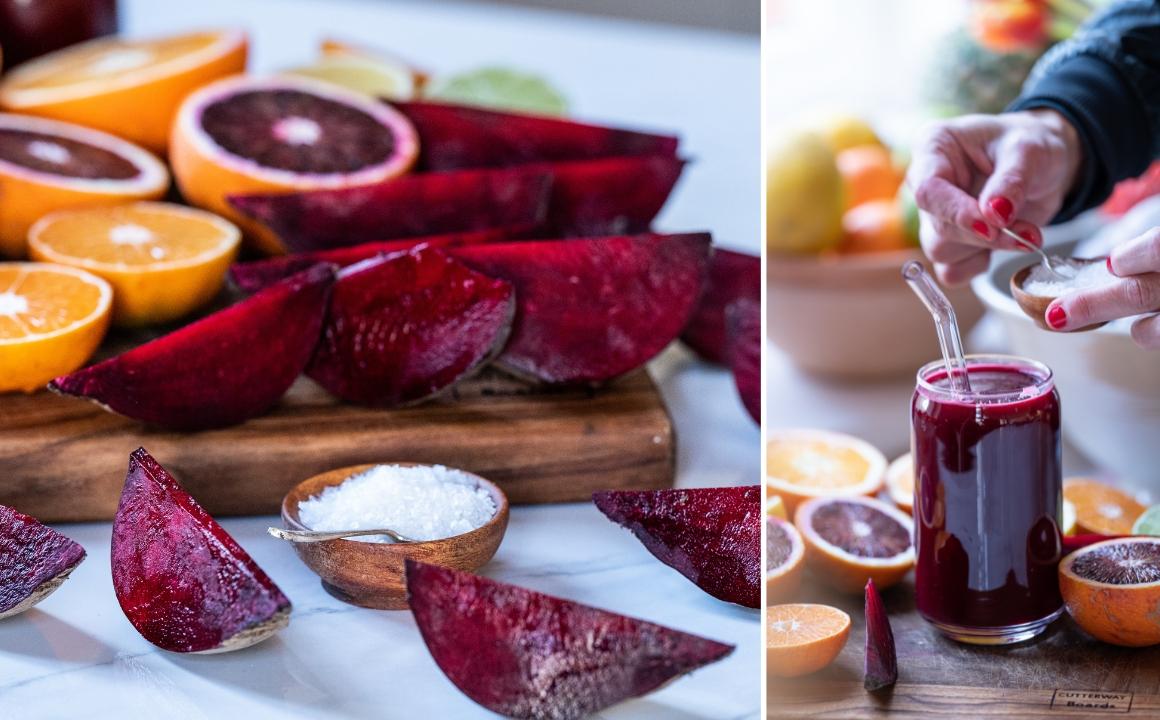
After training
Recommended time: Within 30-60 minutes after exertion
The anti-inflammatory properties and antioxidants can support muscle recovery and reduce oxidative stress.
Dosage: 200-300ml, ideally combined with protein. You could combine beetroot juice after training with a protein source (protein shake, quark, nuts).
Carla's tips for maximum performance
- Always test during training
The most important tip of all: before using beetroot juice on race day and the days leading up to it, test it during training. This is the only way to be sure if beetroot juice agrees with you and doesn't strain your digestive system. Some people are said to react with stomach issues – you shouldn't find that out during a race. - Prefer organic quality
With regular and frequent consumption, organic produce is worth it. Conventional beetroot can be contaminated with pesticides. - Don't overdo it
More than 500 ml may not provide additional benefits. Pay attention to your intuition and your culinary appetite. - Freshly pressed is significantly more effective
Freshly pressed juice offers the highest nitrate content – studies suggest that pasteurisation can reduce a significant portion of nitrates. Storage and light exposure also degrade nutrients over time. If you opt for store-bought juice: look for "unpasteurised" or "cold-pressed," at least 90% beetroot content, and buy small bottles with a recent bottling date. - Freshly pressed tastes better
Sure, there's no accounting for taste, and self-praise is no recommendation. But I would bet that any of our recipes taste better than the carton alternative from the supermarket. This way, you can enrich your race preparation or training culinarilly instead of suffering through it.
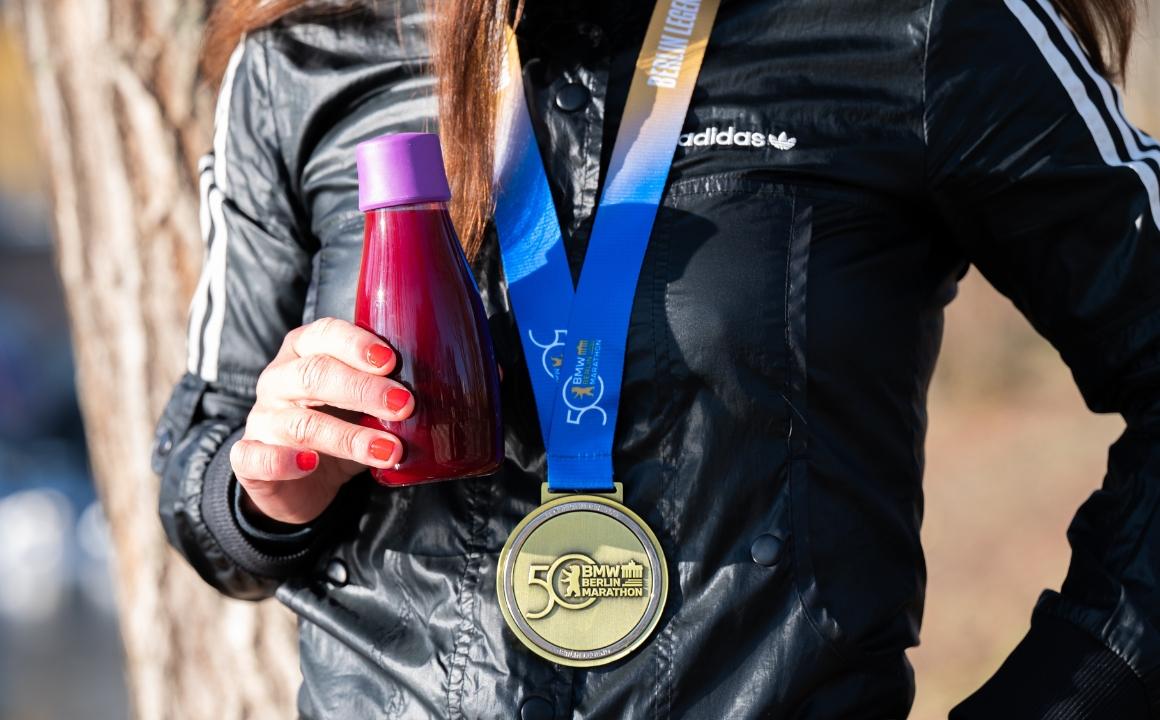
Carla's conclusion: Not without my juice
First, the result of my two-year test in training and competitions: I will continue to prepare for upcoming races with a 1-week beetroot juice cure – as described above. During tougher training sessions, I also feel that beetroot juice is my "Popeye trick" when it comes to setting a new personal best. That's why I drink about 350 ml of beetroot juice 2-3 hours before tempo runs or threshold intervals.
Of course, this is my subjective feeling, but both in races and in training, I have the impression that beetroot juice boosts my performance or at least stabilises it – especially when other factors like weather or sufficient sleep aren't ideal. It might be a placebo effect. I'll gladly take it! The fact is, I enjoy drinking freshly pressed beetroot juice anyway. So why not use that culinary pleasure for running...? If you want to test beetroot juice for your training, feel free to start with our beetroot juice recipes and let us know here which creation you like best and if you notice a performance-enhancing effect.
Regarding recovery, I generally swear by fueling up as quickly as possible after training with protein and carbohydrates in the form of a shake. Beetroot juice doesn't play as large a role for me here. But of course, you can also use its anti-inflammatory properties for recovery.
How can I make beetroot juice at home? Which juicer is suitable?
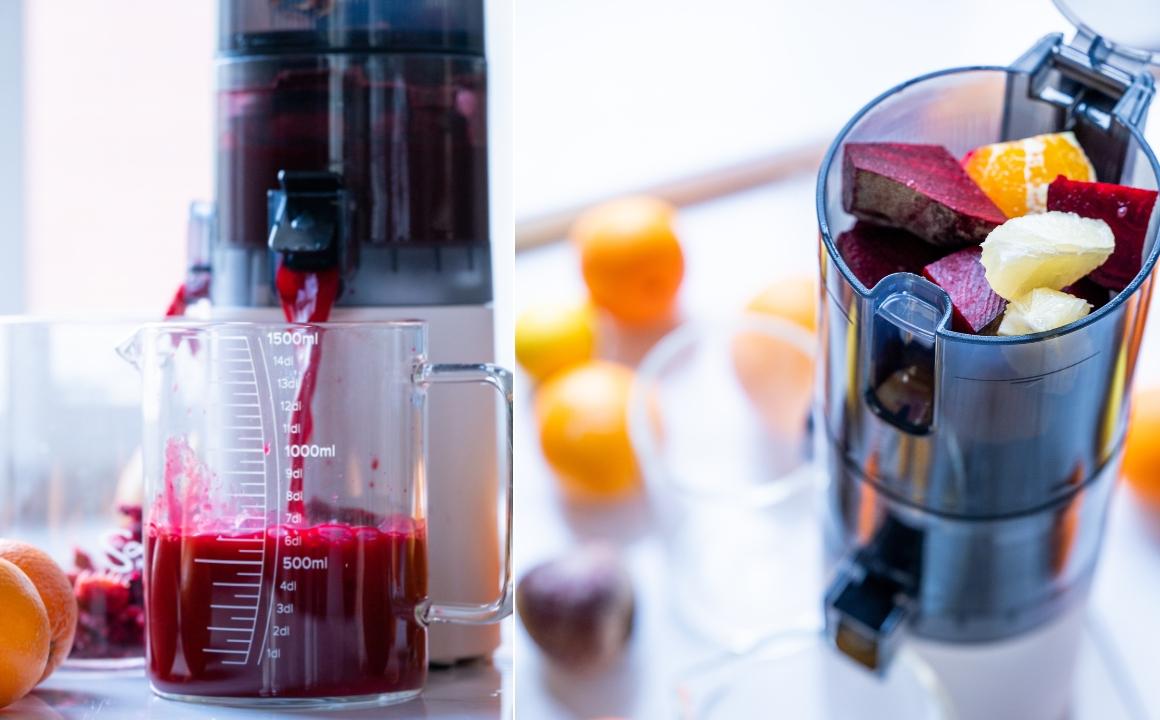
To make fresh beetroot juice, you generally have two types of juicers available: Slow Juicers, which use a cold-press process, and centrifugal juicers, which juice ingredients through high-speed spinning. In both methods, the solid plant components are left behind as pulp.
From our point of view, making beetroot juice with a Slow Juicer has decisive advantages for the taste experience and the quality of the juice, which is why we advocate for the cold-press method:
1. Maximum nutrient yield through minimal oxidation
Slow Juicers work at low speeds (40-120 RPM) and generate almost no heat. Unlike centrifugal juicers, which operate at high speeds (up to 15,000 RPM) and develop heat in the process, Slow Juicers preserve heat-sensitive vitamins, enzymes, and especially the valuable nitrates. The low oxidation protects the nutrients.
2. Maximum taste experience
Due to the gentle processing without heat and oxidation, the juice tastes fresher, more intense, and more aromatic. Non-oxidised juices have a fuller, more natural flavour.
3. Excellent juice yield
The intense taste experience is also reflected in a good to very good juice yield. In particular, horizontal Slow Juicers with twin gears like the Angel Juicer are extremely efficient at juicing roots like beetroot or carrots.
4. Quiet operation
In contrast to loudly rotating centrifuges, Slow Juicers work very quietly. This means you can juice early in the morning without disturbing anyone else.
Which Slow Juicer is best for beetroot?
For the development of our 5 beetroot recipes, we tested various Slow Juicers. We want to introduce three devices in more detail, as they cover different needs regarding household size, desired juice quantity, budget, and quality standards.
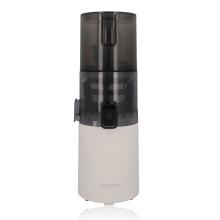
Hurom E30-ST – Compact & simple
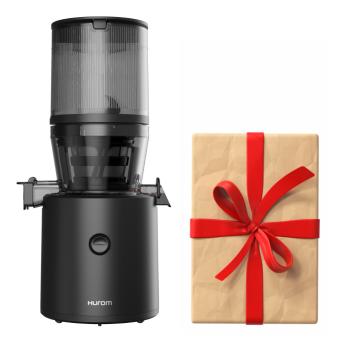
We keep finding that this small, compact self-feeding juicer from Hurom is the ideal entry point for singles and 1-person households. It is handy, space-saving, and straightforward to operate. With one juicing cycle, you produce about 250-300 ml of fresh beetroot juice – perfect for one serving. Cleaning is quick and easy, and the Hurom E30-ST is very attractively priced. Ideal for small kitchens and anyone who wants to enter the world of fresh juices without much effort.
Regular Price: €329.00
Special Price €271.43
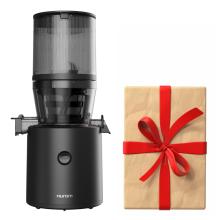
Hurom H320N – For the whole family
The family-sized device with the same proven self-feeding technology as the E30-ST, but with significantly more volume. The XL filling chamber and larger pressing chamber allow for 550-600 ml of juice per cycle – ideal for families and larger households (3-5+ people). Simply fill the chamber, and the juicer does the rest automatically. Perfect for anyone who regularly needs larger quantities of juice and values convenience and time-saving.
Regular Price: €599.00
Special Price €488.00
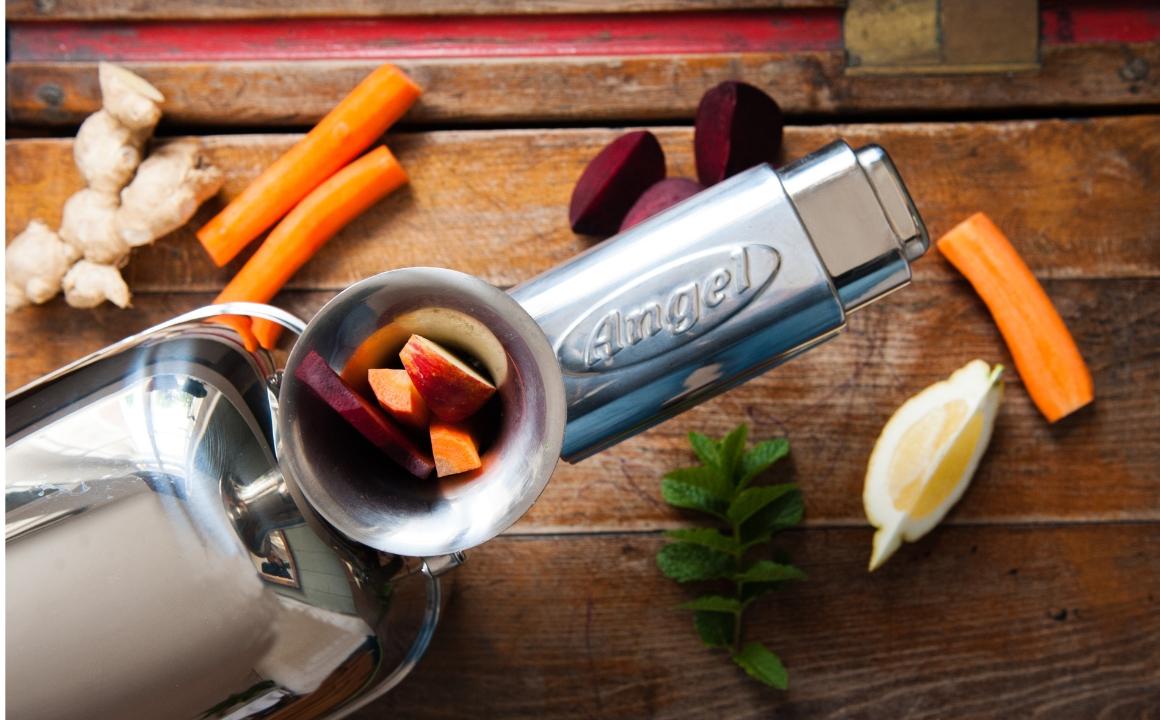
Angel Juicer – Premium stainless steel juicer for maximum yield
Let's be honest: the Angel Juicer isn't quite as convenient as the two self-feeding juicers presented above. You have to feed the ingredients in bit by bit and, especially with roots, press them into the gears with some force. BUT: the Angel Juicer is also the absolute champion for maximum juice yield from beetroot. This horizontal juicer, with its stainless steel twin gears, literally extracts every drop from the deep red tuber and other root vegetables. The taste experience is unsurpassed – full-bodied, intensely aromatic, and clear. Crafted entirely from stainless steel, the Angel Juicer is an investment for decades. If you don't want to compromise on juice yield and taste, and also like making green juices from celery, leafy greens, or grasses alongside root juices, the Angel Juicer is the right choice – here, the high price definitely pays off.
Homemade beetroot juice: 5 favourite recipes
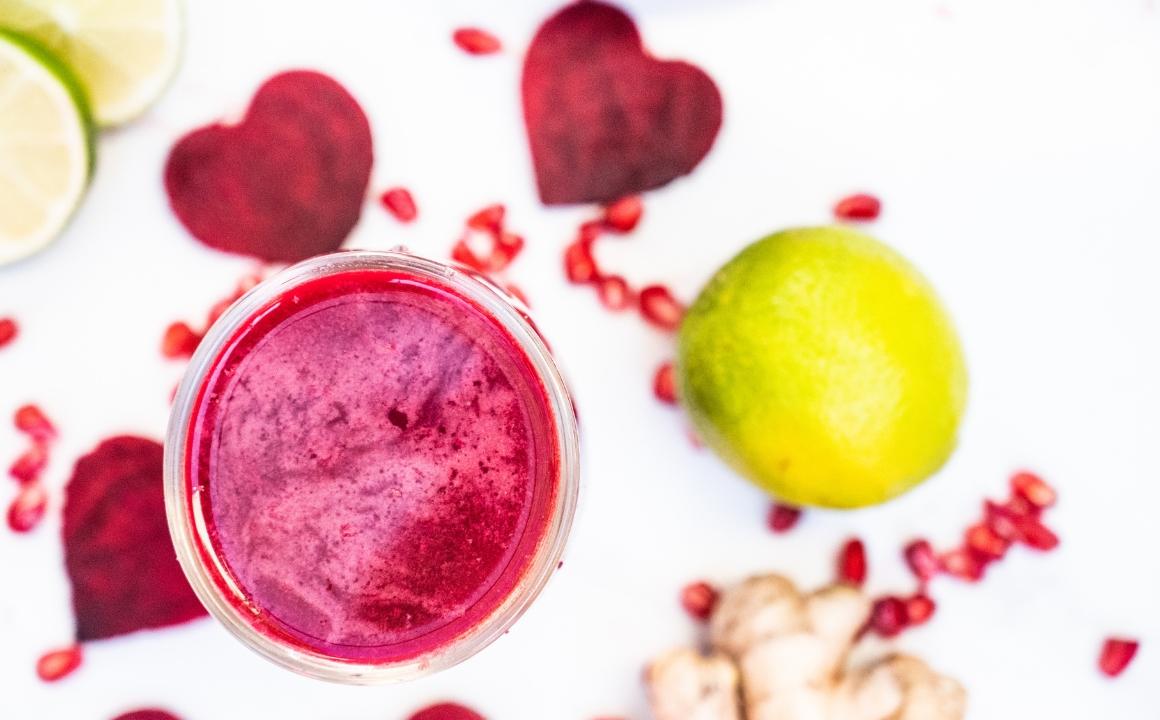
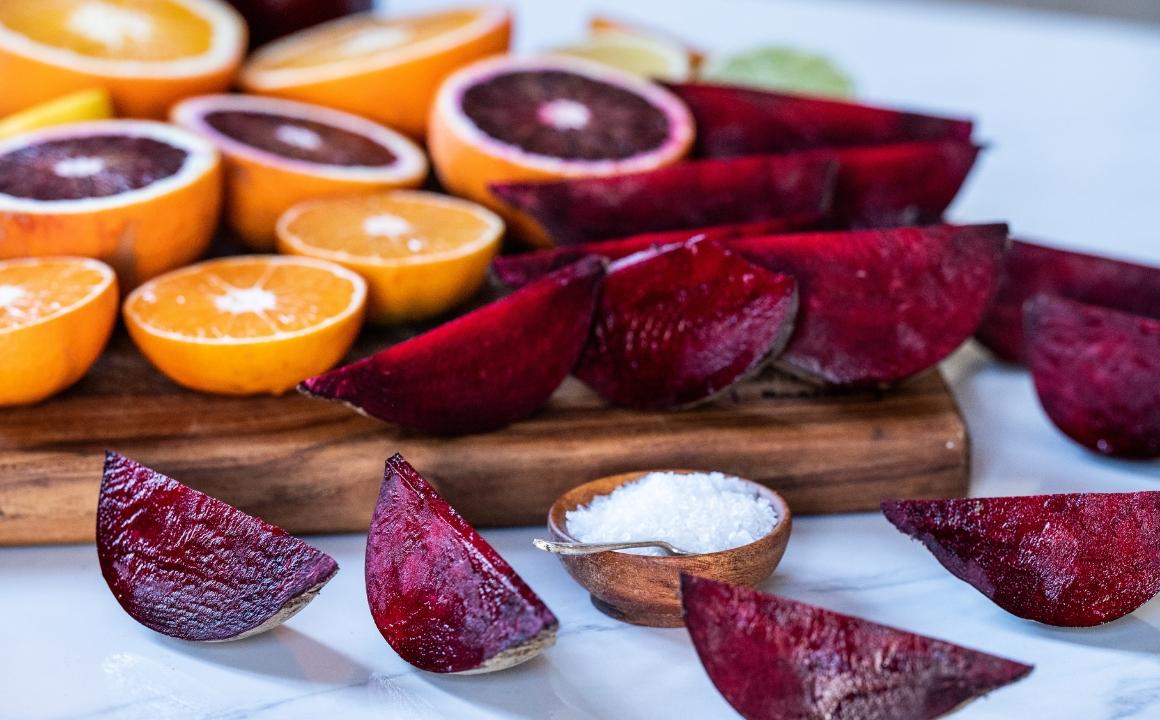
Of course, you can drink freshly pressed beetroot juice pure. But that would be a shame, because with a few ingredients, you can transform it into a culinary explosion. We present 5 favourite red creations, and one thing is guaranteed never to be missing: lemon, lime, and/or orange, as these are the perfect counterparts to the earthy sweetness of the beetroot.
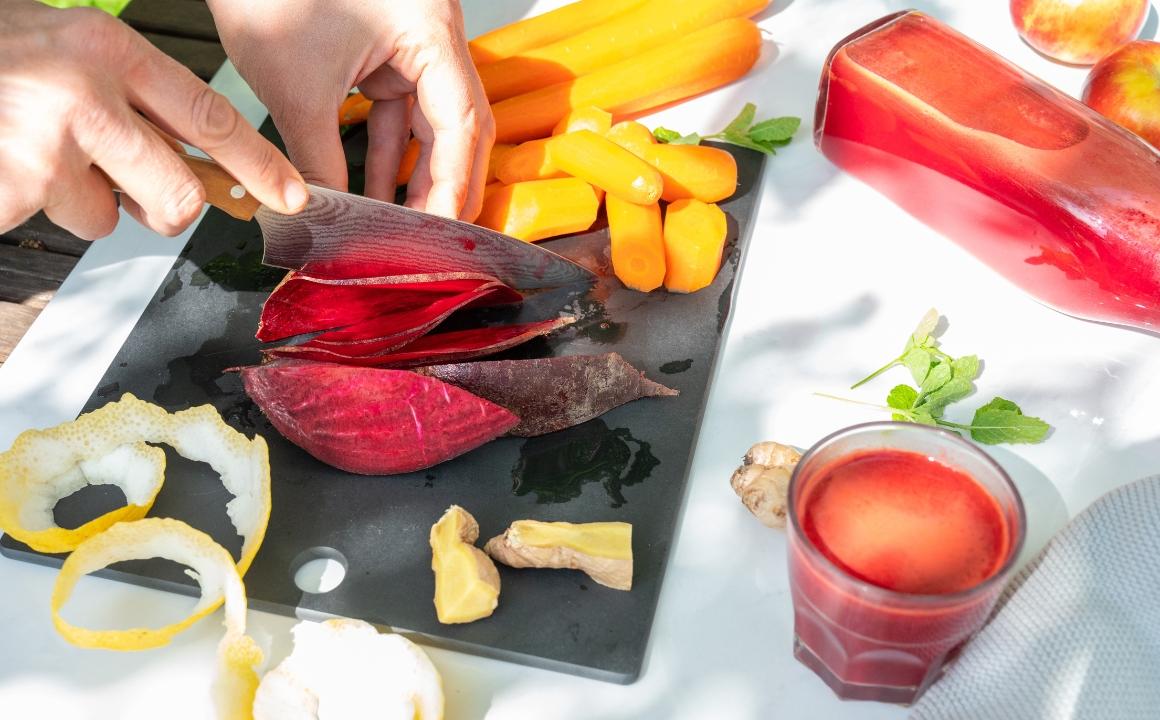
Important preparation note: Beetroot has strong staining properties and is therefore often used as a natural dye in the food industry. Therefore, it's best to use a cutting board that can handle stains (glass or plastic) and be careful with your clothing.
Beetroot juice with pomegranate, apple, ginger & lime
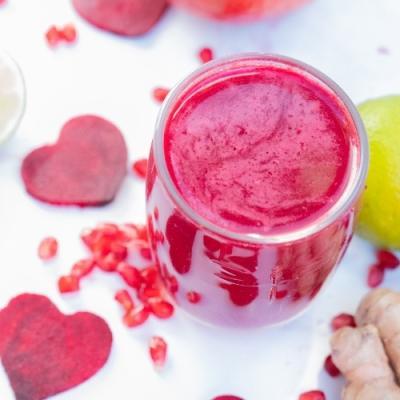
Ingredients
- 200 g beetroot fresh and unpeeled
- 100 g pomegranate seeds
- 125 g apple with peel
- 35 g or 1/2 lime with peel
- 5 g ginger with peel
Instruction
-
Deseed the pomegranate. Wash all remaining ingredients thoroughly and cut them to fit the feed chute or feeding chamber of your juicer.
-
Add the ingredients and, if necessary, push them toward the press unit using the tamper that comes with your device. When no more juice is coming out of the juice outlet, your beetroot juice is ready.
-
We recommend storing the beetroot juice in the fridge for no longer than 24 hours.
-
Enjoy from the heart!
Beetroot juice with orange, lemon & a pinch of salt
Ingredients
- 650 g beetroot fresh and unpeeled
- 250 g orange unpeeled
- 60 g lemon peeled
- 1 pinch of salt optional
Instruction
-
Peel the oranges and lemon, wash the beetroot thoroughly, and cut everything to fit the feed chute or chamber of your juicer. Gradually add the ingredients and, if necessary, use the tamper to gently push them toward the press. Once no more juice is coming out of the spout, your beetroot juice is ready.
-
If you want to use the beetroot juice as a pre-workout drink, enjoy it about 2–3 hours before your run or race.
-
We recommend not storing the beetroot juice in the fridge for longer than 24 hours.
-
Enjoy from the heart!
Beetroot Juice with Golden Beet, Apple, Lime & Ginger
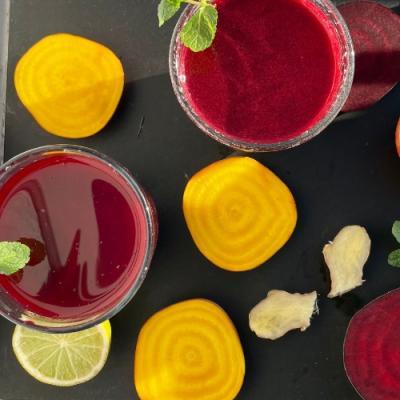
Ingredients
- 350 g red and yellow beetroot resh and unpeeled
- 220 g apple unpeeled; corresponds to approx. 2 small apples
- 50 g lime with peel
- 3 g ginger with peel
Instruction
-
Wash all ingredients thoroughly and cut them to fit the feed chute or feeding chamber of your juicer. Gradually add the ingredients and, if necessary, use the plunger to gently press them toward the press. Once no more juice is coming out of the juice spout, your beetroot juice is ready.
-
We recommend not storing the beetroot juice in the fridge for longer than 24 hours.
-
Enjoy from the heart!
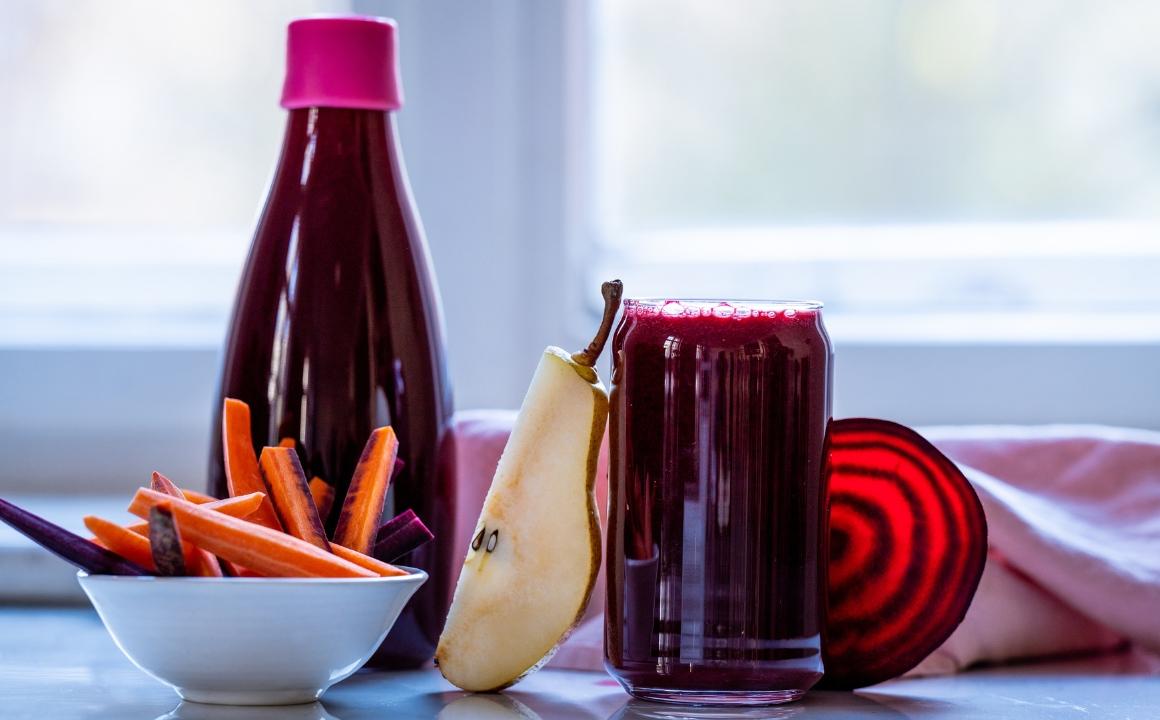
Beetroot juice with carrots, pear, lemon, turmeric, and a pinch of pepper
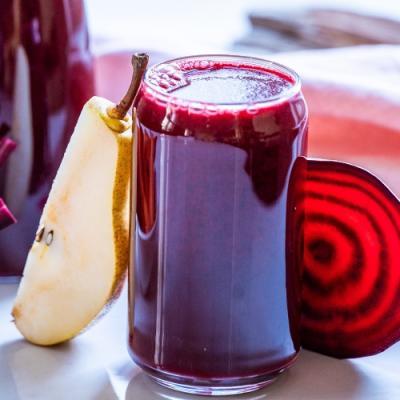
Ingredients
- 300 g beetroot fresh and unpeeled
- 200 g carrots fresh and unpeeled
- 250 g ripe pear unpeeled; can happily be a floury variety
- 70 g lemon peeled, plus a small piece with peel
- 10 g turmeric with peel
- 1 pinch black pepper black pepper, or the piperine it contains, improves the bioavailability of turmeric
Instruction
-
Peel the lemon, leaving a small piece with the peel on. Wash the remaining ingredients thoroughly and cut them so they fit into the feed chute or feeding chamber of your juicer. Gradually add the ingredients and, if necessary, use the tamper to gently push them towards the press. When no more juice is coming out of the juice spout, your beetroot juice is ready. Pour the juice into glasses, add a pinch of black pepper, and stir with a spoon.
-
We recommend not storing the beetroot juice in the fridge for longer than 24 hours.
-
Enjoy from the heart!
Beetroot juice with carrots, apple, lemon, ginger & mint
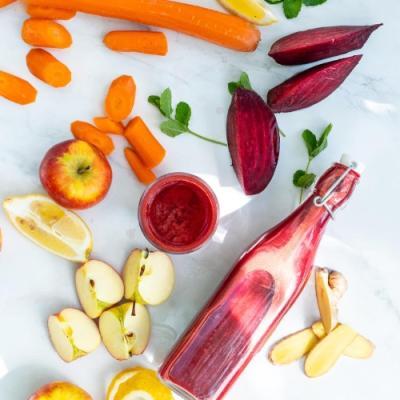
Ingredients
- 250 g beetroot fresh and unpeeled
- 250 g carrots unpeeled
- 150 g apple with peel
- 35 g lemon peeled
- 5 g ginger with peel
- 10 g mint fresh
Instruction
-
Peel the lemon, wash all the remaining ingredients thoroughly, and cut them to fit the feeding chute or chamber of your juicer. Gradually add the ingredients and, if necessary, use the tamper to gently push them toward the pressing unit. Once no more juice is coming out of the juice outlet, your beetroot juice is ready.
-
We recommend storing the beetroot juice in the refrigerator for no longer than 24 hours.
-
Enjoy it from the heart!
Frequently asked questions about beetroot juice
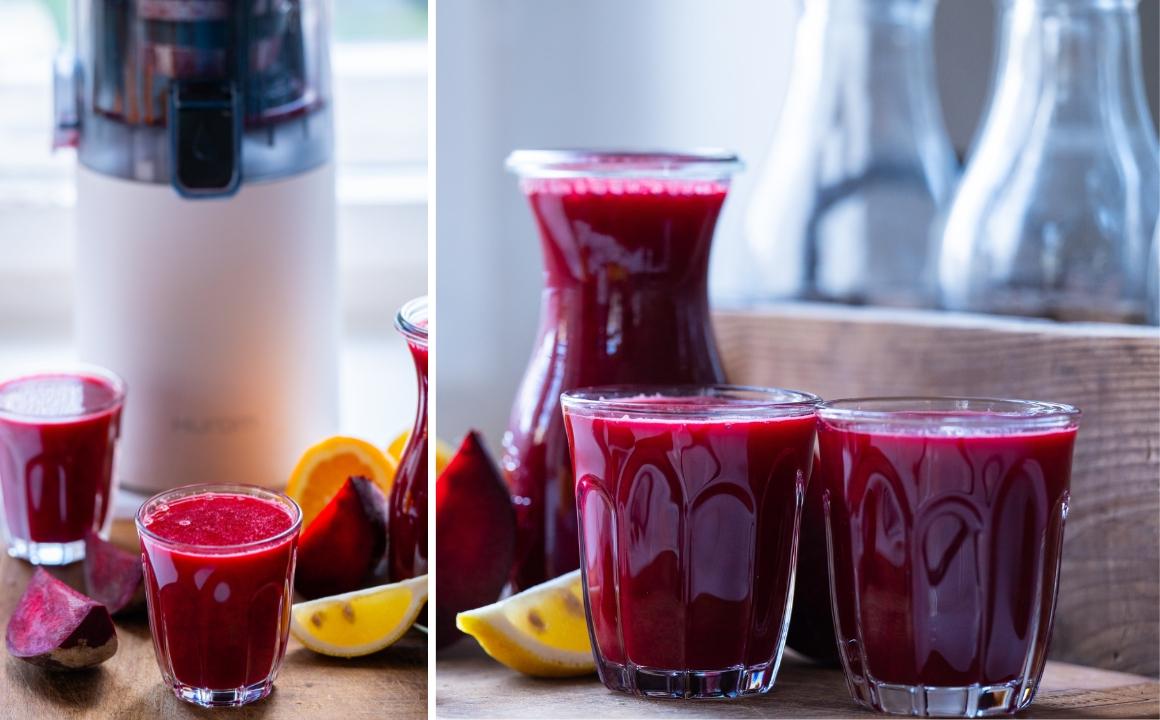
How long does homemade beetroot juice last?
Up to 24 hours in the refrigerator. Freshly pressed beetroot juice should ideally be drunk immediately. The nitrate content and other nutrients can degrade quickly once the juice comes into contact with oxygen. We therefore recommend storing the juice well-chilled for no longer than 24 hours.
Should I juice beetroot raw or cooked?
Raw is better for maximum nutrients. We exclusively use the raw version for our beetroot juice recipes. Firstly for taste reasons, and secondly to benefit from maximum nutrient content. Cooking can cause a significant portion of heat-sensitive nitrates to be lost. Vitamin C and some enzymes are also destroyed.
Tip: If you don't tolerate raw beetroot well, steam it briefly (10-15 min) instead of boiling it. This helps preserve more nutrients.
Where and when can I buy beetroot?
Available year-round, freshest harvest from late September. You can buy beetroot almost all year round in organic shops, supermarkets, or at weekly markets. The new harvest usually comes onto the market starting in late September and is available until spring. During this time, you get the freshest and best quality produce at the lowest price. Thanks to good storage, beetroot is available almost all year round, but is then considered stored goods rather than a fresh harvest.
Are there any side effects of beetroot juice?
Harmless for most people. Beetroot juice is safe for most people. A harmless effect is the red discolouration of urine and stool (beeturia), which is completely normal and harmless. However, there are a few serious points to consider:
Caution for the following people:
- Kidney Stones: Raw beetroot contains oxalic acid, which may promote kidney stones. If you are prone to kidney stones, talk to your doctor.
- Low Blood Pressure: Be cautious if you have very low blood pressure, as nitrates can dilate blood vessels and this could lead to dizziness.
- Iron Overload: In cases of haemochromatosis (iron storage disease), beetroot should only be consumed in moderation.
Can I buy ready-made beetroot juice?
Yes, but freshly pressed is better. Yes, but with limitations. Store-bought beetroot juice is often pasteurised, which can reduce the nitrate content.
What to look for when buying:
- Not pasteurised (check the label)
- At least 90% beetroot content (many products are diluted)
- No added sugar
- Organic quality where possible
- Cold-pressed for maximum nutrients
Why does beetroot juice taste so earthy?
The earthy taste comes from geosmin. The earthy taste comes from geosmin, an organic compound also found in soil. Some people perceive this taste more strongly than others. Combine beetroot in a freshly pressed juice with citrus aromas, tropical fruits like pineapple or passion fruit, and add ginger or herbs like mint or lemon verbena. This allows you to not only soften but wonderfully complement its earthy-sweet flavour. Feel free to check out our 5 favourite recipes for beetroot juice for inspiration.
Can I juice the beetroot leaves as well?
Yes, absolutely – they are very nutrient-dense! Yes, definitely! The leaves are said to be even more nutrient-dense than the tuber itself. In terms of taste, they are slightly bitter and taste similar to Swiss chard. Simply wash them well before juicing. Combine 1 handful of leaves with about 1-2 beetroot tubers. It's best to juice the leaves in alternation with hard vegetables.
Should I peel beetroot before juicing?
Not necessary for organic; better to peel conventional produce. We exclusively use organic quality and therefore skip peeling. Instead, we wash the beetroot and brush it thoroughly. For conventional produce, we recommend peeling the tuber as thinly as possible due to higher pesticide residues.
Do you enjoy drinking beetroot juice? Which recipe is your favourite? Do you use the red power for your training?
We look forward to your feedback here.
Customer Service
Phone | Mon. - Sat. 10:00 - 18:00
+49 30 - 44 79 34 23
Store | Mon. - Sat. 10:00 - 18:00
Urbanstr. 177a
10961 Berlin
Germany
... more info about our store »
Slow Juicer Recommendations
Regular Price: €329.00
Special Price €271.43
Regular Price: €599.00
Special Price €488.00

Add comment
4 | Comment(s)
Which filter should I use to juice beetroot with the Sana slow juicer?
Thank you very much.
Kind regards,
Gudrun Müller
use the fine strainer for juicing beetroot. That way you’ll get the highest juice yield and the clearest juice.
Best regards,
Carla
Thanks so much for the lovely inspiration!!!
absolutely!! The combination with pomegranate is simply wonderful. And both main ingredients are available now in winter. If you like, you can add a bit of lime zest directly into the glass for the olfactory experience – heavenly.
Wishing you lots of joy and pleasure with this red seducer!
Carla