


















 Deutsch
  Englisch
 Make Your Own Beetroot Juice: 5 Recipes + Runner Field Test
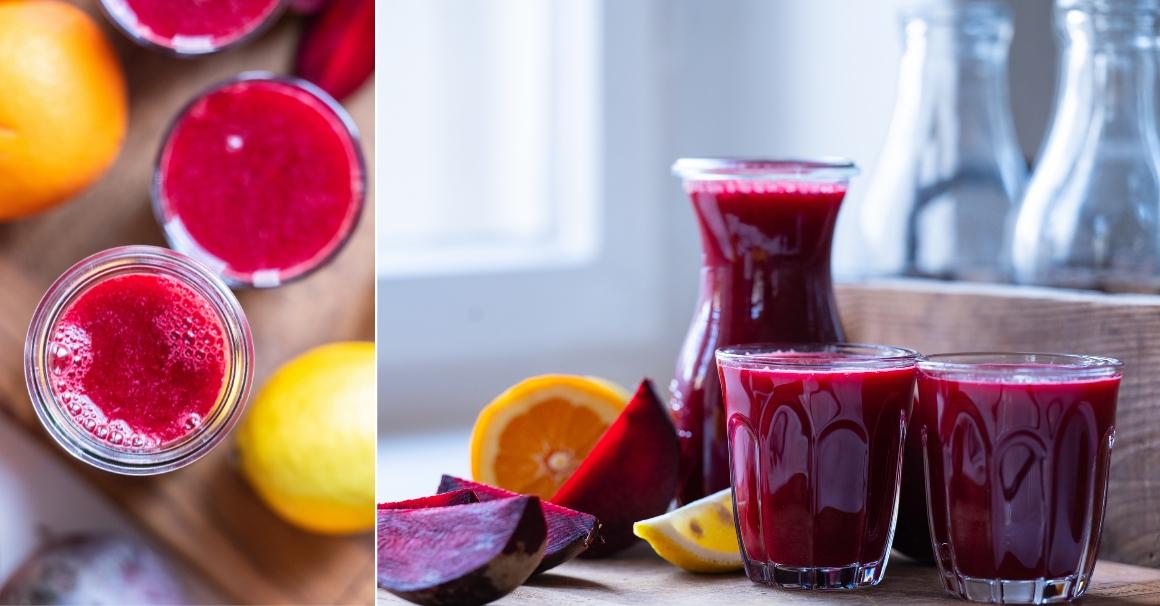
Beetroot juice is often described as a real superfood – packed with vitamins, minerals and phytonutrients. And yet, it’s not only kids who turn up their noses as soon as they think of the red bulb. What we’ve discovered: You can use beetroot to create incredibly delicious juices that make our culinary hearts skip a beat. Its earthy, slightly sweet flavour pairs beautifully with citrus notes, ginger and herbs such as mint or lemon verbena. You really don’t need much more than that to lure even stubborn beetroot sceptics into a purple-tinted experiment. Because honestly: is there any more seductive colour to drink than beetroot juice?
And of course, homemade beetroot juice doesn’t just taste better than store-bought, it’s also likely to contain significantly more nutrients. We’ll introduce you to this red root vegetable and share our favourite beetroot juice recipes. You’ll learn everything you need to know about making fresh beetroot juice – right up to choosing the right juicer. We’ll also take a closer look at the hype around why so many endurance athletes swear by beetroot juice for boosting performance – because Carla put it to the test in real life!
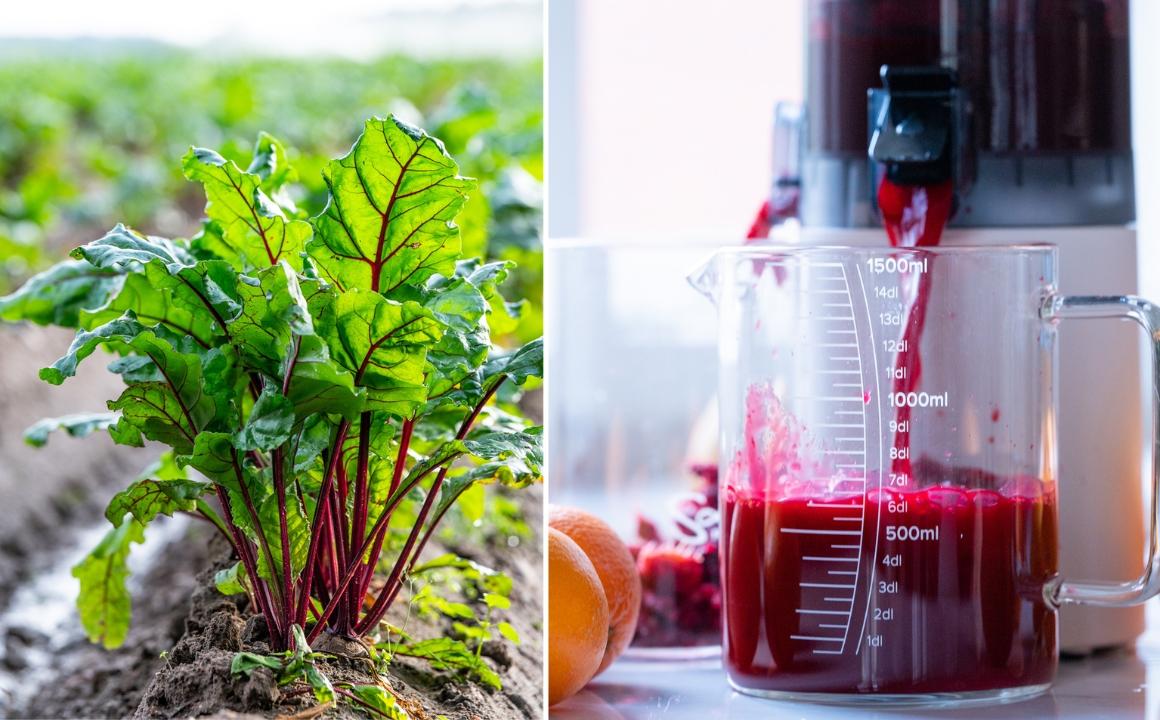
Make your own beetroot juice: overview
- Why is beetroot juice so healthy?
- Beetroot juice for endurance athletes: Carla’s real-life test
- How can I make beetroot juice myself?
- Which juicer is best for beetroot?
- Make your own beetroot juice: 5 favourite recipes
- Frequently asked questions about beetroot juice
Why is beetroot juice so healthy?
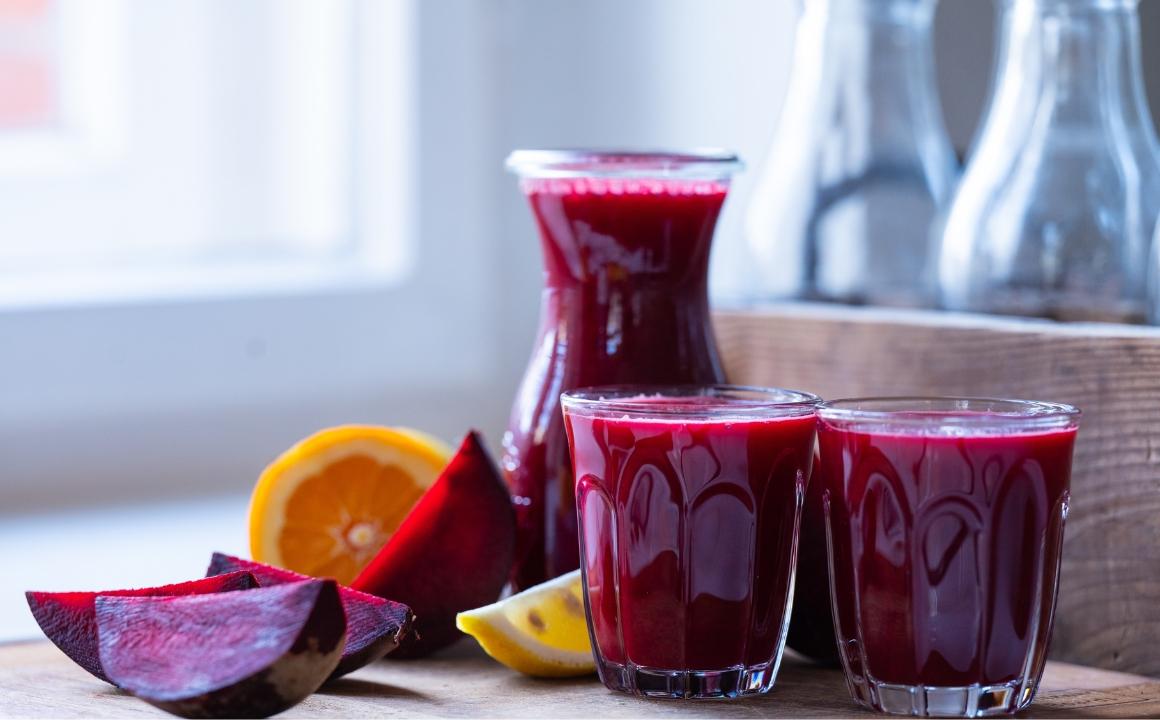
Beetroot (also called red beet) is one of the most nutrient-dense vegetables out there. Among other things, it provides us with minerals and trace elements such as calcium, potassium, magnesium, sodium and iron, B vitamins and vitamin C, as well as important phytonutrients. No wonder this red bulb is a key ingredient in traditional dishes in many countries and cultures – for example in the North German dish labskaus or the Eastern European soup borscht.
Used raw – as in freshly pressed juice – you get maximum root power in your glass, because we juice beetroot using a cold-press method with a slow juicer. This keeps heat-sensitive nutrients such as vitamin C intact.
Key nutrients in beetroot juice:
- Nitrates: Converted in the body into nitric oxide and can dilate blood vessels. This can be interesting for endurance athletes – more on that in the next chapter.
- Folic acid: Beetroot is rich in folic acid, which is important for the formation of red blood cells.
- Iron: Can support oxygen transport in the blood. Not only interesting for athletes.
- Antioxidants: Betalains are phytonutrients that give beetroot its intense colour and, thanks to their antioxidant properties, help combat free radicals.
Beetroot is harvested in late autumn and, thanks to its excellent storage properties, is available to us all winter long as a local vegetable – exactly when we need its root power the most.
Beetroot juice for endurance athletes: Carla’s real-life test
Before I became a mother, I ran two marathons a year for many years – Hamburg in spring and Berlin in autumn. In between there were a few 10K races and at least one half marathon as a performance check. I never really had an off-season – I just kept running. Then my daughter was born – I kept running, but reduced the mileage and lost interest in racing.
A few years ago, I got the bug again – and realised that I had seriously lost speed. My daughter isn’t even of age yet and, after a few months of training for a 10K, completely outclassed me. That makes my runner’s heart very happy and at the same time motivates me to at least keep up a little. Structured training is back on my agenda – long runs, tempo runs and intervals – and thanks to those “few extra years on the clock”, I now pay very conscious attention to fine-tuning every little screw between loading and recovery so I can improve my performance while staying as injury-free as possible.
And this is where my beloved beetroot juice comes in. Back in the marathon game, I suddenly kept seeing hordes of runners on Instagram who, for days or even up to a week before their marathon, were posting stories of themselves forcing down beetroot juice from cartons in the hope of boosting their race performance. My interest was piqued, and I was more than ready to use freshly pressed, delicious beetroot juice as a natural performance booster. First, though, I wanted to really understand why and how this is supposed to work. You’ll find what I discovered in theory below – and my subjective experience after two years of testing in the conclusion:
How can beetroot juice boost your performance?
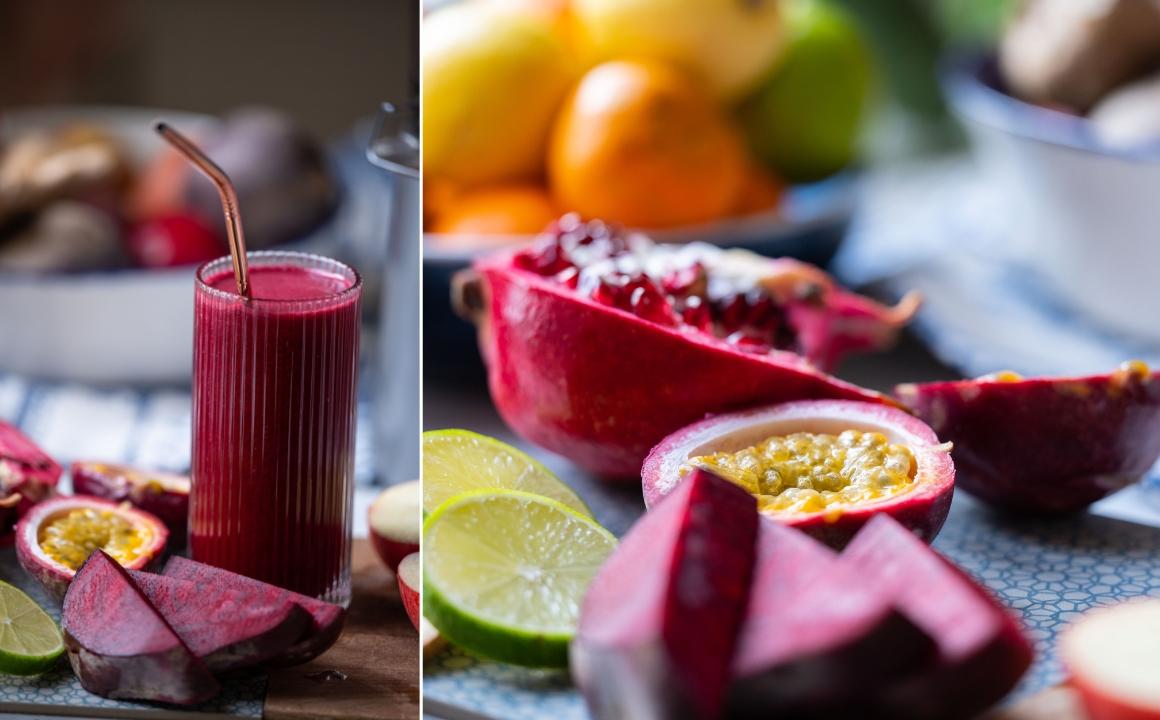
Beetroot juice has established itself in the sports world as a natural performance enhancer – completely legal and without serious side effects. Numerous studies suggest that people who regularly drink beetroot juice may be able to measurably improve their endurance performance. The secret lies in the natural nitrates in beetroot. In the body, these are converted into nitric oxide (NO), which can have several positive effects:
Potential benefits for athletes:
1. Improved oxygen utilisation
- Mitochondria are thought to work more efficiently
- Potentially less oxygen is needed for the same output
- Fatigue may be delayed
2. Dilated blood vessels
- Blood flow to the muscles may be improved
- Nutrient transport may be faster
- Oxygen supply may be optimised
3. Increased VO2max
VO2max (maximal oxygen uptake) describes the maximum amount of oxygen your body can take in, transport and use in the muscles per minute during intense exercise. The higher your VO2max, the more oxygen your muscles have available for energy production – and the longer and more intensely you can maintain endurance efforts.
- Maximal oxygen uptake may be increased
- Studies suggest possible performance gains in endurance sports
- Time to exhaustion may be extended
4. Faster recovery
- Anti-inflammatory properties may come into play
- Muscle soreness may be reduced
- Recovery after intense sessions may be faster
As a beetroot fan, it was a no-brainer for me to test the juice as a performance booster. If even just two of these four points proved true – perfect. It’s also said that recreational athletes notice performance-enhancing effects – such as a lower heart rate at the same workload or a longer time to fatigue – more clearly than elite athletes. The reason: in elite athletes, the systems for oxygen transport and utilisation are already highly optimised, so the effect of beetroot juice on performance is much smaller. Still, even that small effect can be interesting – especially when seconds or hundredths matter.
And of course, beetroot juice isn’t just interesting for runners – it’s relevant for all endurance sports: cycling, triathlon, duathlon, swimming, and more.
Timing is everything: When should you drink beetroot juice?
Before training or a race
Recommended timing: 2–3 hours before your session
Nitrate levels in the blood tend to peak after about 2–3 hours. This is likely when the performance-supporting effect is at its strongest. If I’m doing a tempo run around midday, I drink my juice sometime between 9 and 10 a.m.
Dosage: 300–500 ml of beetroot juice is commonly recommended as a guideline. For a pre-workout juice, I prefer the recipe Runner’s Booster. This creation combines beetroot and citrus fruits with a good pinch of salt to support your electrolyte balance.
Tip for race day:
You could start a daily “juice protocol” 3–6 days before a race and drink about 400 ml of beetroot juice in the morning. This may help top up your nitrate stores. If you tolerate it well (definitely test this during training first!), I would then drink about 300 ml of juice roughly 2.5 hours before the start on race day.
After training
Recommended timing: Within 30–60 minutes after your session
The anti-inflammatory properties and antioxidants can support muscle recovery and reduce oxidative stress.
Dosage: 200–300 ml, ideally combined with protein. For example, you could combine beetroot juice after training with a protein source (protein shake, quark/cottage cheese, nuts).
Carla’s tips for maximum performance
- Always test it in training first
The most important tip of all: Before you use beetroot juice in the lead-up to a race and on race day, test it in training. That’s the only way to know whether beetroot juice agrees with you and is easy on your digestion. Some people reportedly experience stomach issues – you really don’t want to discover that for the first time on race day. - Prioritise organic quality
If you drink beetroot juice regularly and frequently, it’s worth buying organic. Conventional beetroot can contain pesticide residues. - Don’t overdo it
More than 500 ml likely doesn’t bring additional benefits. Pay attention to how you feel and to your enjoyment of the drink. - Freshly pressed is far more effective
Freshly pressed juice offers the highest nitrate content – studies suggest that pasteurisation can significantly reduce nitrates. Storage and exposure to light also degrade nutrients over time. If you do buy ready-made juice, look for “unpasteurised” or “cold-pressed”, at least 90% beetroot content, and choose small bottles with a recent bottling date. - Freshly pressed tastes better
Taste is subjective and self-praise is no recommendation – but I’d still bet that any of our recipes tastes better than the carton alternatives from the supermarket. That way, your race preparation or training becomes a culinary highlight instead of something you have to choke down.
Carla’s conclusion: Not without my juice
First, the outcome of my two-year test in training and racing: I’ll continue to prepare for upcoming races with a one-week beetroot juice protocol – as described above. In harder training sessions, I also feel that beetroot juice is my Popeye move when it comes to chasing a new personal best. That’s why, before tempo runs or threshold intervals, I drink about 350 ml of beetroot juice 2–3 hours beforehand.
Of course, this is my subjective impression, but in both races and training I feel that beetroot juice boosts or at least stabilises my performance – especially when other factors like weather or sleep are less than ideal. Maybe it’s a placebo effect. I’ll gladly take it! The fact is, I love drinking freshly pressed beetroot juice anyway. So why not channel that culinary joy into my running…? If you’d like to test beetroot juice in your own training, feel free to start with our beetroot juice recipes and let us know here which creation you like best – and whether you notice any performance boost.
When it comes to recovery, I generally swear by getting protein and carbohydrates in as quickly as possible after training, usually in the form of a shake. That’s why beetroot juice doesn’t play such a big role for me there. But of course, you can also use its anti-inflammatory properties to support your recovery.
How can I make beetroot juice myself? Which juicer is suitable?
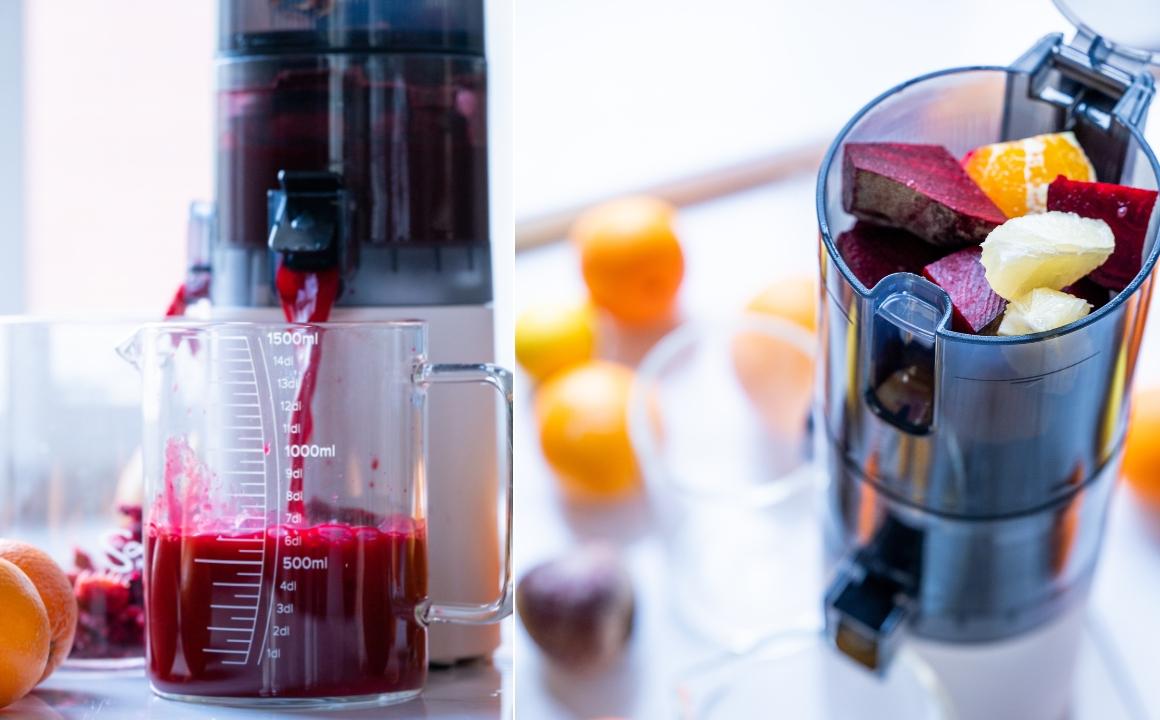
To make fresh beetroot juice, you basically have two types of juicers to choose from: slow juicers, which work with a cold-press method, and centrifugal juicers, which extract juice by rapidly spinning (centrifuging) the ingredients. Both methods leave the solid plant fibres behind as pulp.
From our point of view, making beetroot juice with a slow juicer has decisive advantages in terms of flavour and juice quality – which is why we strongly recommend the cold-press method:
1. Maximum nutrient yield through minimal oxidation
Slow juicers operate at low speeds (40–120 rpm) and generate hardly any heat. In contrast, centrifugal juicers run at high speeds (up to 15,000 rpm) and generate heat, which can damage nutrients. With slow juicers, heat-sensitive vitamins, enzymes and especially valuable nitrates are largely preserved. Low oxidation further protects these nutrients.
2. Maximum flavour
Because the juice is processed gently, without heat and with minimal oxidation, it tastes fresher, more intense and more aromatic. Non-oxidised juices have a fuller, more natural flavour.
3. Very good juice yield
The intense flavour also reflects the good to very good juice yield. Horizontal slow juicers with twin gears like the Angel Juicer are extremely efficient when it comes to juicing roots such as beetroot or carrots.
4. Quiet operation
Compared to the loud spinning of centrifugal juicers, slow juicers run very quietly. So you can juice in the early morning without waking everyone else up.
Which slow juicer is best for beetroot?
For the development of our 5 beetroot recipes, we tested various slow juicers. We’d like to introduce three of them in more detail, as they cover different needs in terms of household size, desired juice volume, budget and quality expectations.
Hurom E30-ST – Compact & simple
Time and again, we find that this small, compact self-feeding juicer from Hurom is the ideal entry-level model for singles and one-person households. It’s handy, space-saving and easy to use. One juicing cycle yields about 250–300 ml of fresh beetroot juice – perfect for a single serving. It’s also quick and easy to clean and is very attractively priced. Ideal for small kitchens and for anyone who wants to start enjoying fresh juices without a lot of hassle.
Regular Price: €329.00
Special Price €299.00
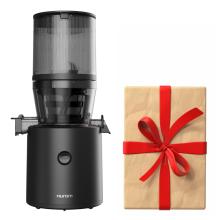
Hurom H320N – For the whole family
This family model uses the same tried-and-tested self-feeding technology as the E30-ST, but with significantly more capacity. The XL feeding chamber and larger juicing chamber allow you to produce 550–600 ml of juice per cycle – ideal for families and larger households (3–5+ people). Simply fill the chamber and the juicer does the rest automatically. Perfect for anyone who regularly needs larger quantities of juice and values convenience and time savings.
Regular Price: €599.00
Special Price €524.00
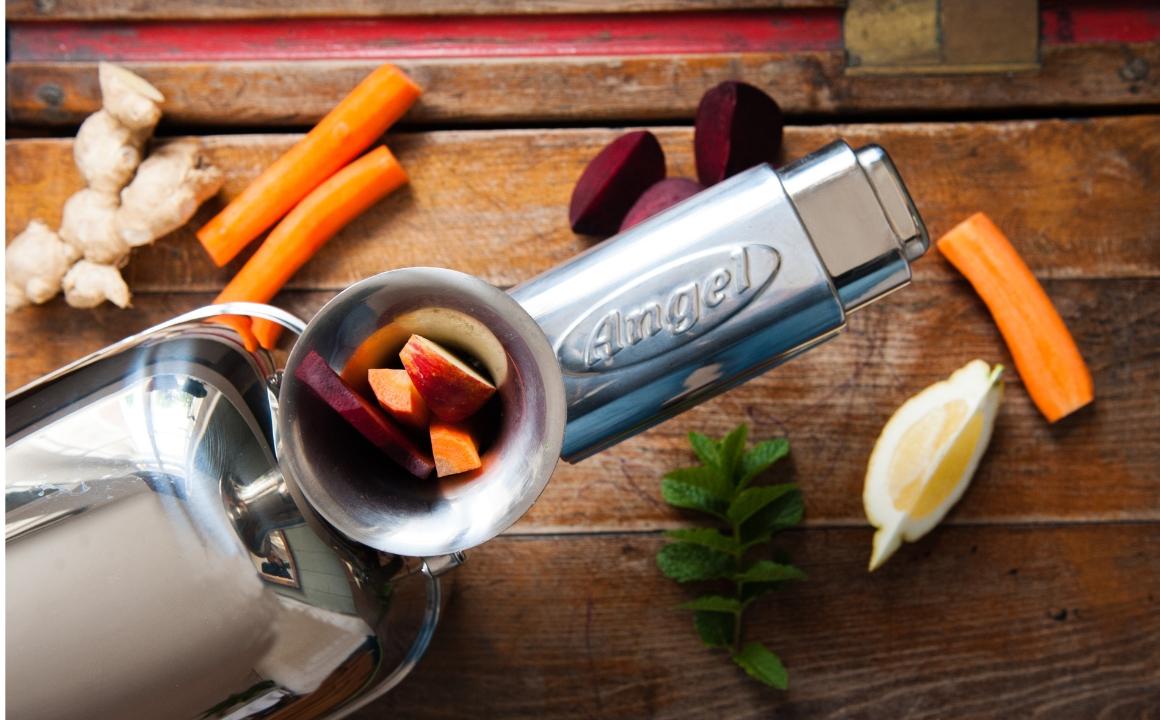
Angel Juicer – Premium stainless-steel juicer for maximum juice yield
To be totally honest: the Angel Juicer is not quite as comfortable to use as the two self-feeding juicers we just introduced. You need to add the ingredients bit by bit and, especially with roots, press them towards the gears with a little bit of force. BUT: the Angel Juicer is the absolute champion in terms of juice yield for beetroot juice. This horizontal juicer, with its stainless-steel twin gears, literally squeezes every last drop out of the deep-red bulb and other root vegetables. The flavour is unmatched – full-bodied, intensely aromatic and clear. Made entirely from stainless steel, the Angel Juicer is an investment for decades. If you don’t want to compromise on juice yield and flavour, and you enjoy making not just root juices but also green juices from celery, leafy greens or grasses, the Angel Juicer is the right choice – the high price really does pay off here.
Angel Juicer in action: juicing root vegetables
In this video, you can see the Angel Juicer in action juicing carrots – the process is identical for beetroot. You’ll clearly see how the ingredients are pushed towards the gears with the tamper and how efficiently the Angel Juicer works:

Make your own beetroot juice: 5 favourite recipes
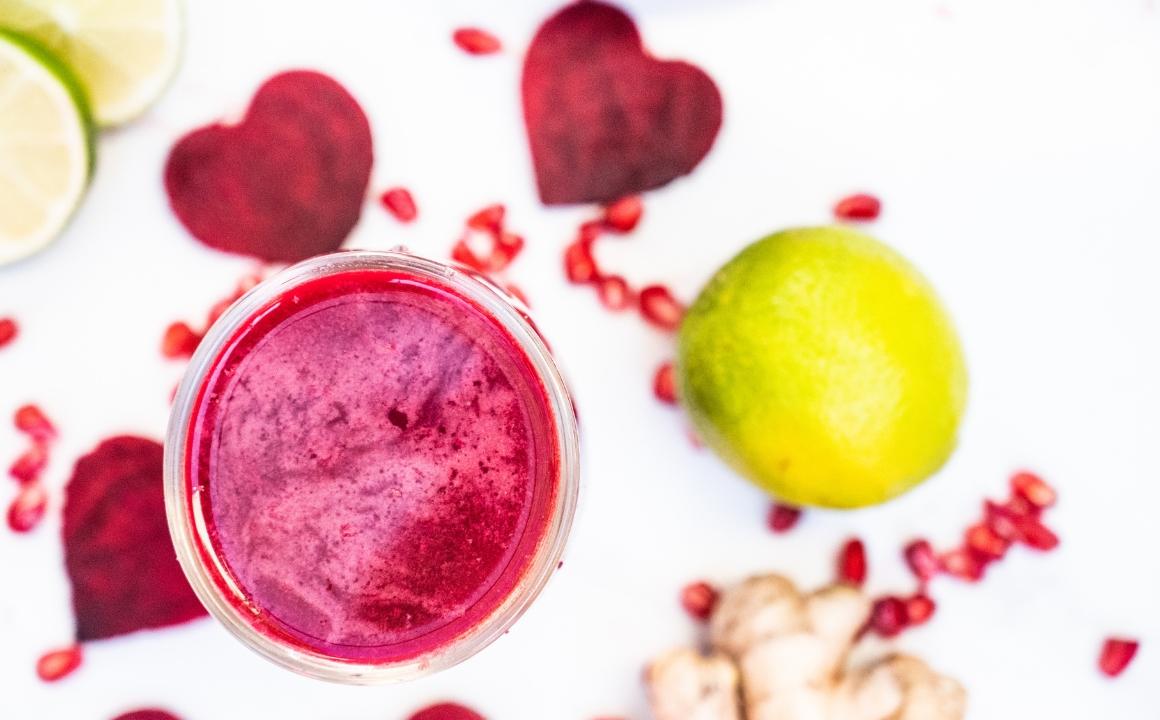
Of course, you can drink freshly pressed beetroot juice straight. But that would be a shame, because with just a few extra ingredients you can turn it into a real flavour explosion. We’ll introduce 5 favourite red creations, all of which include one non-negotiable: lemon, lime and/or orange – they’re the perfect counterpart to beetroot’s earthy sweetness.
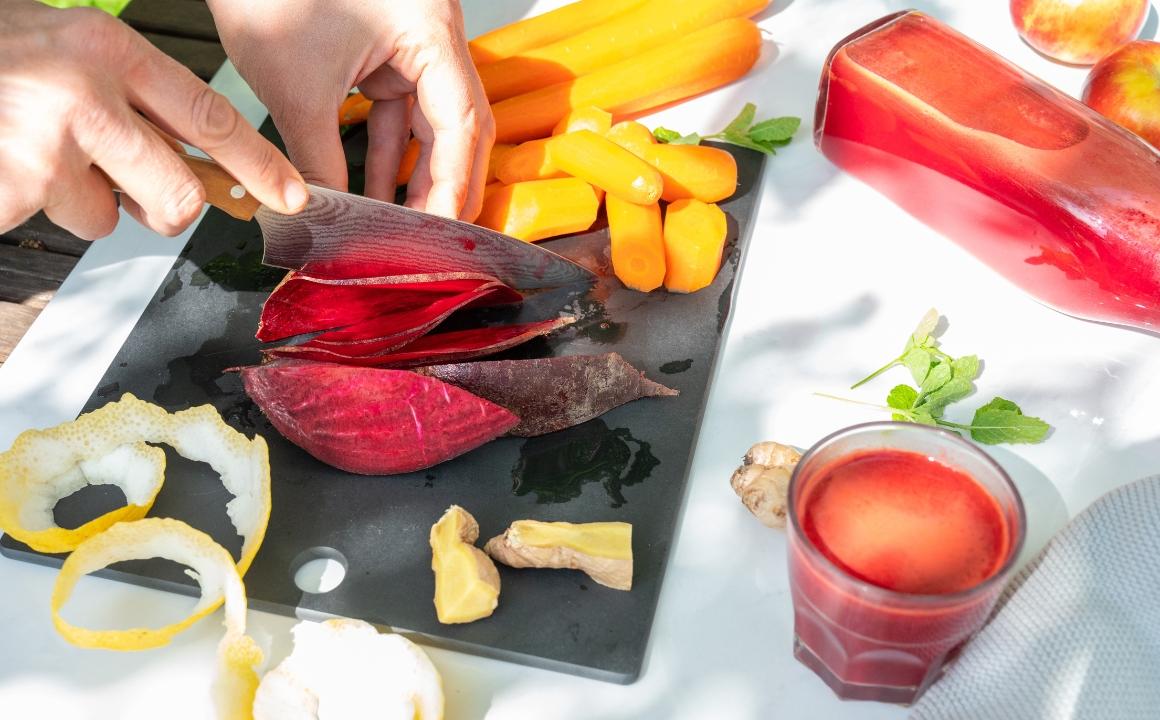
Important preparation tip: Beetroot stains like crazy and is therefore used as a natural colourant in the food industry. So it’s best to use a chopping board that can handle stains (glass or plastic) and be mindful of what you’re wearing.
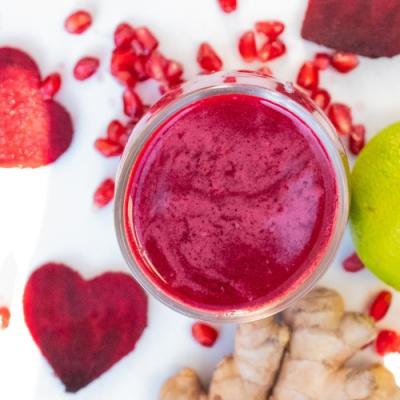
Beetroot juice with pomegranate, apple, ginger & lime
Ingredients
- 200 g beetroot fresh and unpeeled
- 100 g pomegranate seeds
- 125 g apple with peel
- 35 g or 1/2 lime with peel
- 5 g ginger with peel
Instruction
-
Deseed the pomegranate. Wash all remaining ingredients thoroughly and cut them to fit the feed chute or feeding chamber of your juicer.
-
Add the ingredients and, if necessary, push them toward the press unit using the tamper that comes with your device. When no more juice is coming out of the juice outlet, your beetroot juice is ready.
-
We recommend storing the beetroot juice in the fridge for no longer than 24 hours.
-
Enjoy from the heart!
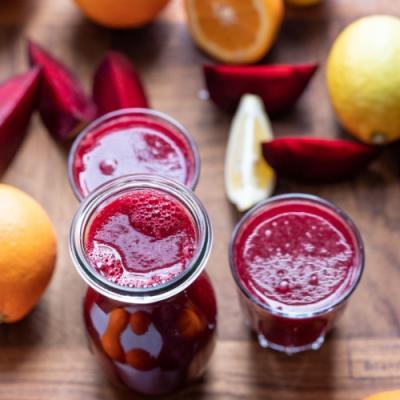
Beetroot juice with orange, lemon & a pinch of salt
Ingredients
- 650 g beetroot fresh and unpeeled
- 250 g orange unpeeled
- 60 g lemon peeled
- 1 pinch of salt optional
Instruction
-
Peel the oranges and lemon, wash the beetroot thoroughly, and cut everything to fit the feed chute or chamber of your juicer. Gradually add the ingredients and, if necessary, use the tamper to gently push them toward the press. Once no more juice is coming out of the spout, your beetroot juice is ready.
-
If you want to use the beetroot juice as a pre-workout drink, enjoy it about 2–3 hours before your run or race.
-
We recommend not storing the beetroot juice in the fridge for longer than 24 hours.
-
Enjoy from the heart!
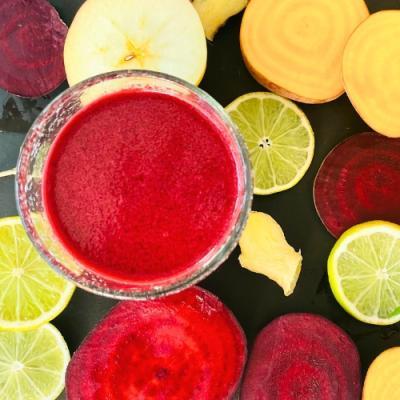
Beetroot Juice with Golden Beet, Apple, Lime & Ginger
Ingredients
- 350 g red and yellow beetroot resh and unpeeled
- 220 g apple unpeeled; corresponds to approx. 2 small apples
- 50 g lime with peel
- 3 g ginger with peel
Instruction
-
Wash all ingredients thoroughly and cut them to fit the feed chute or feeding chamber of your juicer. Gradually add the ingredients and, if necessary, use the plunger to gently press them toward the press. Once no more juice is coming out of the juice spout, your beetroot juice is ready.
-
We recommend not storing the beetroot juice in the fridge for longer than 24 hours.
-
Enjoy from the heart!
Beetroot juice with carrots, pear, lemon, turmeric, and a pinch of pepper
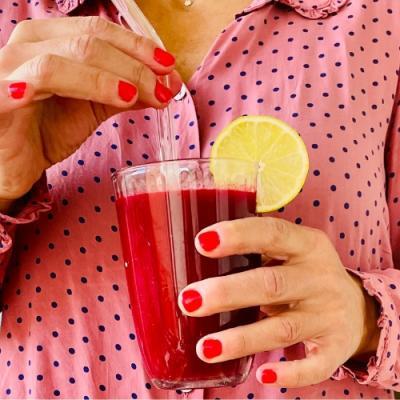
Ingredients
- 300 g beetroot fresh and unpeeled
- 200 g carrots fresh and unpeeled
- 250 g ripe pear unpeeled; can happily be a floury variety
- 70 g lemon peeled, plus a small piece with peel
- 10 g turmeric with peel
- 1 pinch black pepper black pepper, or the piperine it contains, improves the bioavailability of turmeric
Instruction
-
Peel the lemon, leaving a small piece with the peel on. Wash the remaining ingredients thoroughly and cut them so they fit into the feed chute or feeding chamber of your juicer. Gradually add the ingredients and, if necessary, use the tamper to gently push them towards the press. When no more juice is coming out of the juice spout, your beetroot juice is ready. Pour the juice into glasses, add a pinch of black pepper, and stir with a spoon.
-
We recommend not storing the beetroot juice in the fridge for longer than 24 hours.
-
Enjoy from the heart!
Beetroot juice with carrots, apple, lemon, ginger & mint
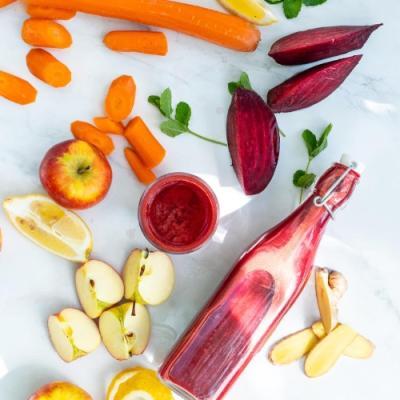
Ingredients
- 250 g beetroot fresh and unpeeled
- 250 g carrots unpeeled
- 150 g apple with peel
- 35 g lemon peeled
- 5 g ginger with peel
- 10 g mint fresh
Instruction
-
Peel the lemon, wash all the remaining ingredients thoroughly, and cut them to fit the feeding chute or chamber of your juicer. Gradually add the ingredients and, if necessary, use the tamper to gently push them toward the pressing unit. Once no more juice is coming out of the juice outlet, your beetroot juice is ready.
-
We recommend storing the beetroot juice in the refrigerator for no longer than 24 hours.
-
Enjoy it from the heart!
Frequently asked questions about beetroot juice
How long does homemade beetroot juice keep?
Up to 24 hours in the fridge. Ideally, freshly pressed beetroot juice should be consumed straight away. Nitrate levels and other nutrients can decline quickly once the juice comes into contact with oxygen. We therefore recommend storing it well chilled for no longer than 24 hours.
Should I juice raw or cooked beetroot?
Raw is best for maximum nutrients. For our beetroot juice recipes we exclusively use raw beetroot – partly for flavour, partly to get the most nutrients. Cooking can destroy a significant portion of heat-sensitive nitrates. Vitamin C and some enzymes are also lost.
Tip: If you don’t tolerate raw beetroot well, steam it briefly (10–15 minutes) instead of boiling. This helps preserve more nutrients.
Where and when can I buy beetroot?
Available year-round, freshest harvest from late September. You can buy beetroot almost all year round at organic shops, supermarkets or farmers’ markets. The new harvest usually appears from late September and is available through to spring. During this time, you’ll get the freshest, best-quality produce at the best price. Thanks to good storage, beetroot is available almost year-round, but is then sold as stored produce rather than fresh harvest.
Are there any side effects from beetroot juice?
Safe for most people. Beetroot juice is generally safe for most people. A harmless effect is the red discolouration of urine and stool (beeturia), which is completely normal and nothing to worry about. However, there are a few important exceptions:
Use caution if you:
- Have kidney stones: Raw beetroot contains oxalic acid, which may promote kidney stones in susceptible individuals. If you’re prone to kidney stones, talk to your doctor.
- Have low blood pressure: If your blood pressure is very low, be cautious, as nitrates can dilate blood vessels and may cause dizziness.
- Have iron overload: In haemochromatosis (iron storage disease), beetroot should only be consumed in moderation.
Can I buy ready-made beetroot juice?
Yes, but freshly pressed is better. Yes – but with caveats. Store-bought beetroot juice is often pasteurised, which can reduce nitrate levels.
What to look for when buying:
- Unpasteurised (it should say so on the label)
- At least 90% beetroot content (many products are diluted)
- No added sugar
- Organic quality if possible
- Cold-pressed for maximum nutrients
Why does beetroot juice taste so earthy?
The earthy flavour comes from geosmin. The earthy flavour is caused by geosmin, an organic compound that is also found in soil. Some people perceive this flavour more strongly than others. Combine fresh beetroot juice with citrus flavours, tropical fruits such as pineapple or passion fruit, and add ginger or herbs like mint or lemon verbena. This doesn’t just tone down the earthy sweetness – it complements it beautifully. For inspiration, have a look at our 5 favourite beetroot juice recipes.
Can I juice the beetroot leaves as well?
Yes, definitely – they’re very nutrient-dense! Absolutely! The leaves are even said to be more nutrient-dense than the bulb itself. In terms of flavour, they’re slightly bitter and similar to chard. Just wash them thoroughly before juicing. Combine a handful of leaves with about 1–2 beetroots. It’s best to juice the leaves alternating with harder vegetables.
Should I peel beetroot before juicing?
No need with organic produce, peel conventional beetroot. We use organic beetroot only and therefore don’t peel it. Instead, we wash it and scrub it thoroughly. For conventional produce, we recommend peeling the bulb as thinly as possible due to higher pesticide residues.
Do you enjoy drinking beetroot juice? Which recipe do you like best?
We’d love to hear your feedback here.
Customer Service
Phone | Mon. - Sat. 10:00 - 18:00
+49 30 - 44 79 34 23
Store | Mon. - Sat. 10:00 - 18:00
Urbanstr. 177a
10961 Berlin
Germany
... more info about our store »
Slow Juicer Recommendations

Regular Price: €399.00
Special Price €299.00
Regular Price: €599.00
Special Price €524.00

Add comment